Testicular Pain or Swelling
Testicular pain or swelling Treatment in Mumbai, explained by Expert Urologist – Dr Amit Gala – It affects many men and requires prompt attention to prevent complications. These symptoms arise from various causes, ranging from minor infections to medical emergencies. Understanding the signs helps determine when professional evaluation becomes necessary. This post provides clear information on causes, symptoms, diagnosis, and Testicular pain treatment in Mumbai options.
Consult us for Urology Concerns
Need help? Book Appointment
+91 9920 84 1111
Common Causes of Testicular Pain or swelling
Testicular pain often stems from epididymitis, an inflammation of the epididymis, the tube behind the testicle. Infections, such as urinary tract infections or sexually transmitted infections like chlamydia, trigger this condition. Pain develops gradually, accompanied by scrotal tenderness, swelling, warmth, fever, or penile discharge.
Orchitis involves direct inflammation of the testicle, commonly due to viruses like mumps or bacterial spread. Trauma from sports injuries, bicycle accidents, or falls causes immediate sharp pain and bruising. Kidney stones refer pain to the testicles through shared nerve pathways, presenting as intermittent severe discomfort with possible hematuria. Inguinal hernias allow abdominal contents to protrude into the scrotum, creating a dull ache relieved by lying down. Prostatitis contributes referred pain, particularly during urination or ejaculation.
Early intervention with antibiotics, rest, and analgesics resolves most cases effectively. Delayed treatment risks abscess formation or chronic discomfort.
Causes of Testicular Swelling
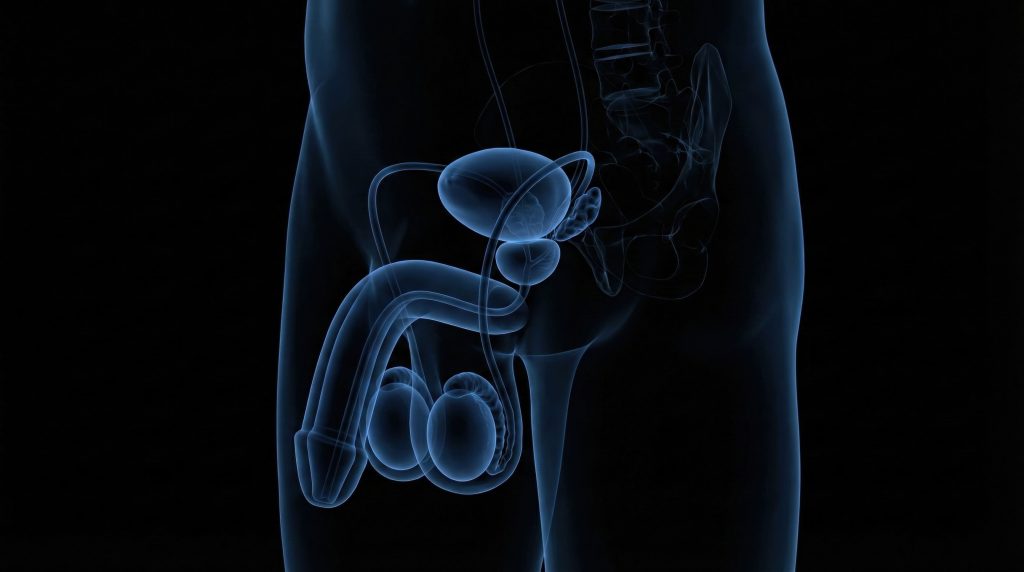
Scrotal swelling frequently accompanies pain. Hydrocele results from fluid accumulation around the testicle, forming a painless, fluctuant mass trans illuminable by light. It occurs post-injury, infection, or spontaneously in adults. Varicocele involves dilated veins resembling a “bag of worms,” predominantly on the left side due to anatomical venous drainage. This condition affects younger men and impairs spermatogenesis through elevated scrotal temperature.
Spermatocele presents as a discrete, sperm-filled cyst adjacent to the testicle. Acute infections produce erythematous, warm swelling with systemic symptoms. Ultrasound imaging differentiates fluid collections from solid masses, providing definitive diagnosis. Rapidly enlarging or painful swellings warrant immediate assessment, while chronic swellings compromise fertility.
Testicular Torsion: A Surgical Emergency
Testicular torsion constitutes a true urologic emergency, where the spermatic cord twists and occludes blood supply. Patients experience abrupt, severe unilateral pain, often nocturnal, with nausea, vomiting, and an elevated or horizontally positioned testicle. This condition predominates in adolescents but occurs across ages.
Physical examination reveals absent cremasteric reflex and negative Prehn’s sign. Color Doppler ultrasound confirms absent intratesticular blood flow. Surgical detorsion and bilateral orchidopexy must occur within 6 hours to salvage the testis. Intermittent torsion necessitates preventive surgery on the contralateral side.
Critical Warning Signs Requiring Urologic Evaluation
Immediate emergency care applies to sudden, severe pain suggestive of torsion. Same-day consultation becomes essential for scrotal swelling exceeding golf ball size, palpable hard lumps, or testicular shape distortion. Persistent pain beyond 2 hours despite analgesia and scrotal elevation indicates underlying pathology.
Fever, nausea, hematuria, hematospermia, or urethral discharge signals infectious etiology amenable to antibiotics. Gynecomastia, nipple tenderness, or hormonal changes accompanying scrotal abnormalities suggest germ cell tumors. Post-traumatic pain persisting beyond 48 hours requires imaging to exclude rupture or hematoma. Monthly testicular self-examination detects 90% of abnormalities at early, curable stages.
Testicular Cancer - Early Recognition Improves Prognosis
Testicular cancer manifests initially as a painless lump or diffuse swelling, predominantly affecting men aged 15-35. Germ cell tumors grow rapidly; seminomas progress more indolently. The mass feels firm and distinct from normal testicular parenchyma. Advanced disease produces ipsilateral pain from hemorrhage or infarction, plus retroperitoneal symptoms like back pain or weight loss.
Risk factors include cryptorchidism history and positive family history. Scrotal ultrasound distinguishes solid neoplasms from cystic lesions. Serum tumor markers—alpha-fetoprotein, beta-human chorionic gonadotropin, and lactate dehydrogenase—elevate in 90% of nonseminomatous tumours. Radical inguinal orchiectomy serves as both diagnosis and primary treatment, followed by surveillance or adjuvant chemotherapy yielding 95% cure rates.
Diagnostic Approach for testicular pain
History elicits symptom onset, trauma, infectious exposures, and family oncologic history. Physical examination assesses testicular consistency, epididymal tenderness, and inguinal hernias. Transillumination differentiates serous fluid from solid lesions. High-resolution scrotal ultrasound with Doppler interrogation evaluates vascularity, torsion, and mass characteristics.
Urinalysis excludes infection; semen analysis quantifies fertility impact. Serum markers guide oncologic suspicion. Surgical exploration confirms and treats torsion intraoperatively.
Testicular Pain or swelling Treatment in Mumbai - Strategies
Epididymitis responds to 10-14 days of targeted antibiotics, scrotal support, and anti-inflammatories. Torsion mandates emergent surgery. Hydrocelectomy excises the tunica vaginalis sac in outpatient fashion. Varicocelectomy or percutaneous embolization improves semen parameters in 60% of cases. Testicular neoplasms undergo orchiectomy with platinum-based chemotherapy for metastatic disease.
Laparoscopic repair addresses concomitant hernias with minimal morbidity. Patient education emphasizes supportive underwear, hydration, and strain avoidance.
Prevention and Screening
Athletic supporters mitigate trauma risk. Prompt urinary tract infection treatment prevents ascending epididymitis. Condom use reduces sexually transmitted infections. Mumps vaccination averts viral orchitis. Smoking cessation lowers malignancy risk. Annual urologic surveillance benefits patients with varicoceles or prior abnormalities.
Consult Dr Amit Gala for Testicular Pain
Book a Consultation
Dr. Amit Gala provides comprehensive urologic evaluation and management for testicular pain and swelling. Schedule a consultation to receive timely diagnosis and personalized treatment.