

Ignoring Urinary Symptoms? BPH Effects on Kidney in men
Many men dismiss urinary symptoms as a normal part of aging, assuming they simply need to accept frequent bathroom trips and weak urine streams. However, these seemingly minor inconveniences often signal benign prostatic hyperplasia (BPH), a condition that can seriously impact kidney health if left untreated. Dr. Amit Gala helps patients across Mumbai understand the critical connection between prostate enlargement and kidney function.
BPH affects most men as they age, with approximately 50% of men in their sixties and up to 90% of men in their seventies and eighties experiencing some degree of prostate enlargement. While the condition itself is benign and non-cancerous, ignoring its symptoms can lead to serious complications, particularly affecting the kidneys, explained in this blog post by a kidney specialist in Mumbai – BPH effects on kidney in men

Consult us for Urology Concerns
Need help? Book Appointment
+91 9920 84 1111
What is BPH and Why does it matter?
Benign prostatic hyperplasia occurs when the prostate gland gradually enlarges over time. This walnut-sized gland sits directly below the bladder and surrounds the urethra, the tube that carries urine out of the body. As the prostate grows, it squeezes the urethra like a clamp on a water hose, making urination progressively more difficult.
The prostate’s strategic location means any enlargement directly impacts urinary function. What starts as minor inconvenience can evolve into serious medical problems affecting not just the bladder, but the entire urinary system including the kidneys.
Common BPH symptoms Men often Ignore
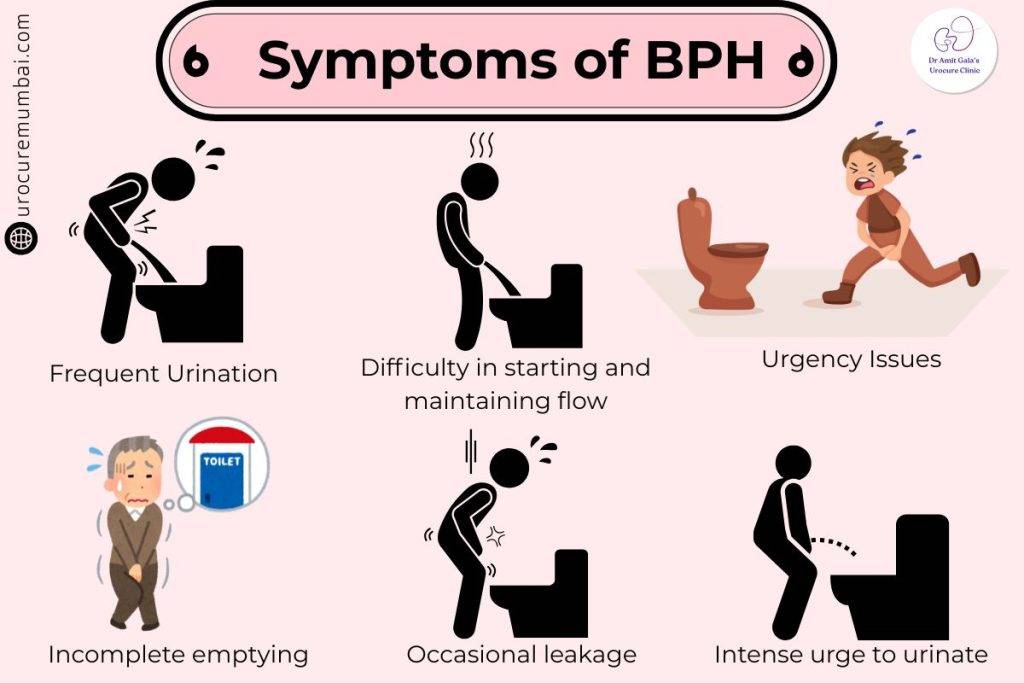
Many men normalize their urinary symptoms, attributing them to getting older. However, these signs deserve medical attention:
Frequent Urination:
- Needing to urinate eight or more times daily
- Waking up multiple times at night to use the bathroom
- Feeling the need to go again shortly after urinating
Difficulty Starting and Maintaining Flow:
- Hesitating before urine stream begins
- Weak or interrupted urine flow
- Straining to empty the bladder
- Dribbling at the end of urination
Urgency Issues:
- Sudden, intense urges to urinate
- Difficulty postponing urination
- Occasional leakage or accidents
Incomplete Emptying:
- Feeling like the bladder isn’t fully empty after urinating
- Needing to urinate again within minutes
These symptoms gradually worsen over months or years, making men less likely to recognize the progression. What seems manageable today can become debilitating tomorrow.
The Dangerous Connection between BPH and Kidney Health
The relationship between prostate enlargement and kidney damage follows a predictable pattern that many patients don’t realize until serious problems develop.
Bladder Outlet Obstruction: When the enlarged prostate blocks urine flow, the bladder must work harder to push urine through the narrowed urethra. Initially, the bladder muscle compensates by becoming thicker and stronger, but this adaptation comes at a cost.
Increased Bladder Pressure: As obstruction worsens, pressure inside the bladder rises during urination. This elevated pressure doesn’t stay confined to the bladder—it transmits backward through the ureters (tubes connecting kidneys to bladder) and into the kidneys themselves.
Hydronephrosis Development: Chronic high pressure causes urine to back up into the kidneys, a condition called hydronephrosis. The kidneys swell with trapped urine, and their delicate filtering structures become compressed and damaged. Think of it like a backed-up drain—when water can’t flow freely, it accumulates where it shouldn’t.
Progressive Kidney Damage: Prolonged hydronephrosis leads to permanent kidney damage. The filtering units, called nephrons, die off and cannot regenerate. Over time, kidney function declines, potentially progressing to chronic kidney disease or even kidney failure requiring dialysis.
Warning signs that BPH is affecting your Kidneys
damaging your kidneys:
Acute Urinary Retention:
- Complete inability to urinate despite urgent need
- Severe lower abdominal pain and swelling
- This medical emergency requires immediate catheterization
Recurrent Urinary Tract Infections:
- Multiple bladder or kidney infections within a year
- Incomplete bladder emptying creates breeding ground for bacteria
- Infections can spread to kidneys, causing serious illness
Blood in Urine:
- Pink, red, or cola-colored urine
- Can result from bladder strain or infection
- Always requires medical evaluation
Swelling and Fluid Retention:
- Leg swelling or puffiness
- Weight gain from fluid accumulation
- May indicate declining kidney function
Fatigue and General Unwellness:
- Persistent tiredness not explained by other causes
- Poor appetite or nausea
- These vague symptoms sometimes indicate kidney problems
How Kidney damage from BPH Progresses
Understanding the timeline helps emphasize why early treatment matters:
Early Stage: The bladder compensates effectively, and kidney function remains normal. Symptoms are mild but present. This stage offers the best opportunity for simple interventions to prevent future problems.
Moderate Stage: Bladder changes become more pronounced with incomplete emptying. Mild hydronephrosis may develop. Kidney function starts showing subtle declines on blood tests. Treatment at this stage can still prevent serious damage.
Advanced Stage: Significant hydronephrosis affects one or both kidneys. Blood tests reveal elevated creatinine and reduced kidney function. Chronic kidney disease may be established. Treatment focuses on preventing further deterioration.
Critical Stage: Severe kidney damage has occurred. Patients may face dialysis or transplant considerations. Prevention and early treatment could have avoided reaching this point.
Medical Complications beyond Kidney damage
BPH doesn’t only threaten kidneys. Other serious complications include:
Bladder Stones:
- Form when urine stagnates in the bladder
- Cause pain, bleeding, and infection
- Require removal procedures
Bladder Damage:
- Chronic overstretching weakens bladder muscle
- Results in poor bladder emptying even after prostate treatment
- May cause permanent incontinence
Complete Urinary Retention:
- Medical emergency requiring immediate catheterization
- Can happen suddenly after holding urine too long
- Extremely painful and potentially dangerous
Diagnostic tests to assess kidney impact
When BPH symptoms appear, proper evaluation determines whether kidney damage has occurred:
Blood Tests:
- Creatinine and blood urea nitrogen measure kidney function
- Elevated levels indicate kidney problems
- Prostate-specific antigen (PSA) screens for prostate issues
Urine Tests:
- Check for infection, blood, or protein
- Assess kidney’s filtering ability
- Detect early signs of kidney damage
Imaging Studies:
- Ultrasound evaluates kidney size and hydronephrosis
- Measures bladder residual urine after urination
- CT scans provide detailed views when needed
Uroflowmetry:
- Measures urine flow rate and pattern
- Helps quantify obstruction severity
- Guides treatment decisions
Treatment options to protect your Kidneys
Addressing BPH early prevents kidney complications. Treatment approaches include:
Medications:
- Alpha-blockers relax prostate and bladder neck muscles
- Combination therapy for moderate symptoms
- Can prevent progression in many cases
Minimally Invasive Procedures:
- UroLift implants hold prostate tissue away from urethra
- Rezum uses steam therapy to reduce prostate size
- Office-based procedures with quick recovery
Surgical Interventions:
- TURP (transurethral resection of prostate) removes obstructing tissue
- Laser procedures vaporize excess prostate tissue
- Simple prostatectomy for very large prostates
- Definitive solutions for severe cases
Emergency Catheterisation:
- Immediate relief for acute retention
- Protects kidneys from dangerous pressure buildup
- Temporary measure before definitive treatment
Lifestyle modifications that Help
While not curing BPH, certain changes can reduce symptoms and protect kidney health:
Fluid Management:
- Drink adequate water throughout the day
- Limit fluids before bedtime
- Avoid excessive caffeine and alcohol
- Stay hydrated without overloading the bladder
Bladder Training:
- Schedule bathroom visits rather than waiting for urgency
- Practice double voiding (urinate, wait, try again)
- Strengthen pelvic floor muscles
- Improve bladder emptying efficiency
Real patient consequences of delayed treatment
Dr. Amit Gala frequently sees patients in Mumbai who waited too long to address BPH symptoms. Some develop severe hydronephrosis requiring emergency hospital admission. Others experience acute retention away from home, facing painful catheterization in unfamiliar emergency rooms.
Most concerning are patients with established kidney damage that could have been prevented. Once kidney function declines significantly, it rarely recovers fully even after successful prostate treatment. These patients face lifelong consequences including increased cardiovascular risk, anaemia, bone disease, and potentially dialysis.
When to seek immediate medical attention
Certain situations require urgent evaluation:
Emergency Warning Signs:
- Complete inability to urinate for several hours
- Severe pain in lower abdomen or back
- High fever with urinary symptoms
- Blood clots in urine
- Confusion or severe fatigue with urinary changes
Don’t wait for regular office hours if experiencing these symptoms. Emergency evaluation can prevent serious kidney damage.
Prevention is always better than Treatment
The best approach to protecting kidney health from BPH involves proactive management:
Early Evaluation:
- Don’t ignore initial symptoms
- Seek evaluation when urinary changes first appear
- Establish baseline kidney function early
- Start treatment before complications develop
Treatment Compliance:
- Take medications as prescribed
- Attend all follow-up appointments
- Report side effects or concerns promptly
- Consider surgical options when appropriate
Consult Dr Amit Gala for Kidney Diseases
Book a Consultation
Ignoring urinary symptoms from BPH isn’t just about tolerating inconvenience—it’s risking serious and potentially irreversible kidney damage. The connection between prostate enlargement and kidney health is direct and dangerous. What begins as frequent bathroom trips can progress to chronic kidney disease, requiring dialysis or transplantation.
The good news is that BPH-related kidney damage is largely preventable. Early recognition of symptoms, prompt medical evaluation, and appropriate treatment protect your kidneys while improving your quality of life. Modern treatments effectively manage BPH with minimal side effects and quick recovery times.
If you’re experiencing any urinary symptoms in Mumbai, don’t wait to see if they improve on their own. Schedule a consultation with Dr. Amit Gala for comprehensive evaluation and personalized treatment recommendations. Protecting your kidney health starts with addressing prostate problems before they cause lasting damage. Your kidneys—and your overall health—deserve that attention.