

Prostate Problems After 50
Turning 50 marks a milestone in men’s health, particularly regarding prostate health. Dr. Amit Gala regularly counsels men across Mumbai about the importance of recognizing and addressing prostate symptoms that commonly emerge during this decade of life. While aging brings natural changes to the prostate gland, certain symptoms signal problems requiring medical attention rather than simple acceptance as inevitable aging.
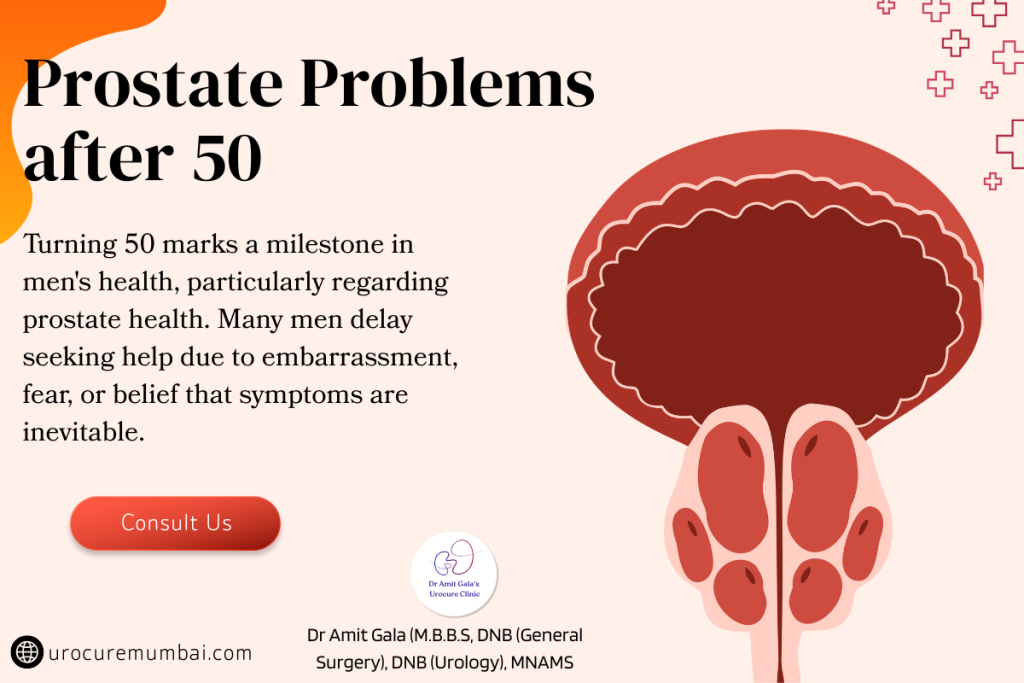
The prostate gland, roughly the size of a walnut, sits below the bladder and surrounds the urethra. Throughout a man’s life, this gland continues growing, and after age 50, this growth accelerates significantly. Statistics reveal that approximately half of men in their sixties and up to 90% of men in their seventies and eighties experience prostate enlargement symptoms. Understanding which symptoms demand immediate attention versus those requiring monitoring can literally save lives.
Consult us for Urology Concerns
Need help? Book Appointment
+91 9920 84 1111
Common Prostate Conditions After 50
Three main prostate conditions affect men over 50, each presenting distinct symptoms and requiring different management approaches:
Benign Prostatic Hyperplasia (BPH): Non-cancerous prostate enlargement causing urinary symptoms. This condition affects most men eventually and represents the most common prostate problem. The enlarged gland squeezes the urethra, creating various urinary difficulties.
Prostatitis: Inflammation or infection of the prostate gland causing pain and urinary problems. While more common in younger men, older men can develop chronic prostatitis causing persistent discomfort.
Prostate Cancer: Malignant growth in prostate tissue. This represents the most serious prostate condition and the second most common cancer in men worldwide. Early detection dramatically improves survival rates.
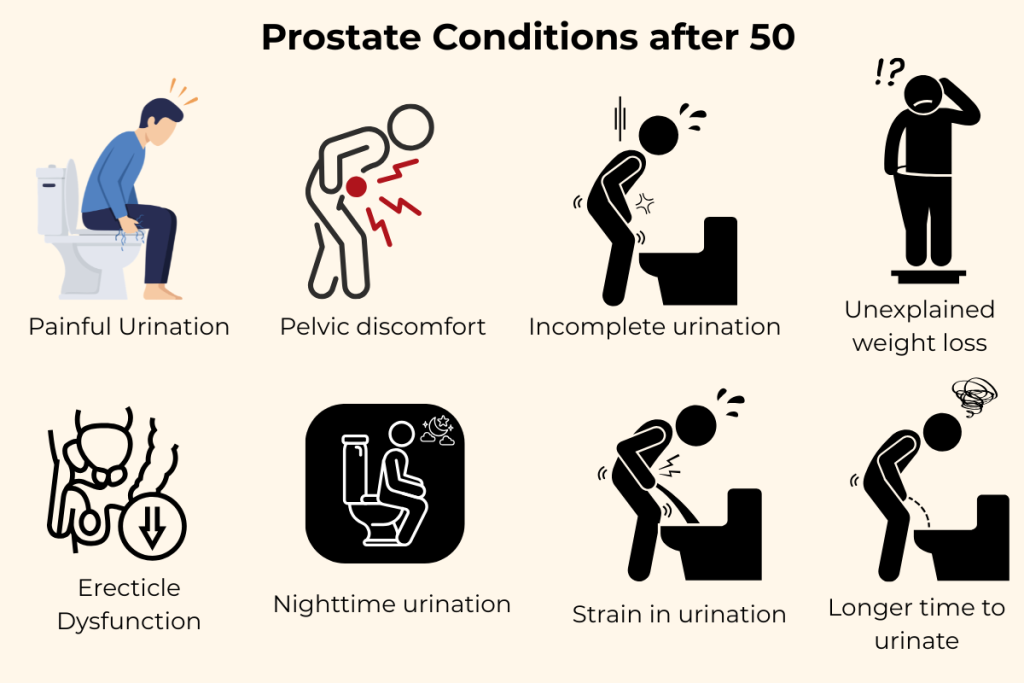
Critical symptoms that demand immediate attention
Certain prostate symptoms indicate serious problems requiring urgent medical evaluation:
Blood in Urine or Semen:
- Pink, red, or brown-tinged urine
- Visible blood in ejaculate
- Can indicate infection, stones, or cancer
- Never normal and always requires investigation
- Particularly concerning if painless
Complete Inability to Urinate:
- Medical emergency called acute urinary retention
- Severe lower abdominal pain and swelling
- Bladder becomes painfully distended
- Requires immediate catheterization
- Can damage bladder and kidneys if untreated
Severe Pain:
- Intense pain in lower abdomen, back, or pelvis
- Pain during urination or ejaculation
- Fever accompanying pain suggests infection
- May indicate acute prostatitis or other serious conditions
Unexplained Weight Loss:
- Losing weight without dietary changes
- Loss of appetite
- General feeling of unwellness
- Can indicate advanced cancer
- Requires comprehensive evaluation
Bone Pain:
- Persistent pain in hips, spine, or ribs
- Pain worsening at night
- May indicate prostate cancer spread to bones
- Demands immediate investigation
Important Urinary Symptoms Requiring Evaluation
While not emergencies, these symptoms warrant medical consultation:
Weak Urine Stream:
- Stream lacks force or pressure
- Takes longer to empty bladder
- Stream stops and starts intermittently
- Dribbling at the end of urination
- Progressively worsening over months
Many men adapt to declining stream strength without realizing it indicates a problem. Comparing current urination to younger years often reveals significant changes.
Increased Urination Frequency:
- Needing to urinate more than eight times daily
- Urinating every hour or two
- Interrupting activities to find bathrooms
- Planning trips around bathroom availability
- Significantly impacting quality of life
Nocturia (Nighttime Urination):
- Waking two or more times nightly to urinate
- Disrupting sleep quality
- Causing daytime fatigue
- Increasing fall risk in darkness
- Often the most bothersome symptom for patients
Getting up once nightly might be normal, but multiple trips consistently indicate prostate problems requiring attention.
Urgency:
- Sudden, intense need to urinate immediately
- Difficulty postponing urination
- Fear of accidents or leakage
- Rushing to bathroom frequently
- Sometimes accompanied by leakage
Hesitancy:
- Difficulty starting urine stream
- Standing at toilet waiting for flow to begin
- Needing to strain or push
- Taking progressively longer to initiate urination
Incomplete Emptying:
- Feeling bladder still contains urine after finishing
- Needing to urinate again within 30 minutes
- Constant sensation of bladder fullness
- Double voiding becoming necessary
Pain and Discomfort Symptoms
Pain related to prostate problems varies widely:
Pelvic Discomfort:
- Vague pressure or fullness in lower abdomen
- Discomfort in perineum (area between scrotum and rectum)
- Pain worsening after sitting for long periods
- Relief when standing or walking
Painful Urination:
- Burning sensation during urination
- Sharp pain at start or end of urination
- Discomfort in penis or bladder area
- May indicate infection or inflammation
Painful Ejaculation:
- Discomfort during or after orgasm
- Reduced pleasure from intimacy
- May cause avoidance of sexual activity
- Often accompanies prostatitis
Sexual Function Changes
Prostate problems frequently affect sexual health:
Erectile Dysfunction:
- Difficulty achieving or maintaining erections
- Gradual worsening over time
- Can result from prostate conditions or treatments
- Often improves with appropriate management
Reduced Libido:
- Decreased interest in sexual activity
- May relate to symptoms, discomfort, or anxiety
- Sometimes indicates hormonal changes
Changes in Ejaculation:
- Reduced ejaculate volume
- Retrograde ejaculation (semen entering bladder)
- Pain or discomfort during orgasm
Why these Symptoms matter
Ignoring prostate symptoms carries serious consequences:
Progressive Worsening: Prostate conditions rarely improve spontaneously. Symptoms typically worsen gradually, eventually severely impacting quality of life. What seems tolerable today becomes unbearable tomorrow.
Kidney Damage: Chronic urinary obstruction causes urine to back up into kidneys, potentially causing irreversible damage. Hydronephrosis (kidney swelling) develops silently, and by the time symptoms appear, significant damage may have occurred.
Bladder Damage: Constantly working against obstruction weakens bladder muscle over time. Eventually, the bladder cannot empty effectively even after prostate treatment, causing permanent dysfunction.
Missed Cancer Diagnosis: Many prostate cancer symptoms overlap with benign conditions. Assuming symptoms result from aging rather than cancer delays diagnosis, reducing treatment options and survival chances.
Diagnostic Approach
When patients report concerning symptoms, Dr. Amit Gala conducts comprehensive evaluation:
Medical History:
- Detailed symptom review
- Duration and progression assessment
- Impact on daily life and sleep
- Previous treatments attempted
- Family history of prostate problems
Physical Examination:
- Digital rectal exam assesses prostate size and texture
- Checks for tenderness or irregularities
- Evaluates pelvic muscle tone
Laboratory Tests:
- PSA (prostate-specific antigen) blood test
- Urinalysis checks for infection or blood
- Blood tests assess kidney function
- Additional tests based on findings
Specialized Testing:
- Uroflowmetry measures urination strength
- Post-void residual checks bladder emptying
- Ultrasound evaluates prostate size
- Cystoscopy visualizes bladder and urethra when needed
Prostate problems after 50 - Treatments
Modern medicine offers numerous effective treatments:
Medications:
- Antibiotics treat infections
- Pain medications for discomfort
Minimally Invasive Procedures:
Surgical Solutions:
- TURP removes obstructing tissue
- Laser procedures for prostate reduction
- Prostatectomy for cancer
- Definitive relief for severe symptoms
Active Surveillance:
- Appropriate for some low-risk conditions
- Regular monitoring without immediate treatment
- Treats when progression occurs
Prevention and Risk Reduction
While aging and genetics influence prostate health, certain steps help:
Maintain Healthy Weight: Obesity increases prostate problem risks. Regular exercise and balanced diet support prostate health.
Stay Physically Active: Regular exercise improves urinary symptoms and reduces cancer risk.
Eat Prostate-Healthy Diet: Foods rich in lycopene, omega-3 fatty acids, and antioxidants may benefit prostate health.
Limit Alcohol and Caffeine: These substances can worsen urinary symptoms by irritating the bladder.
Don’t Delay Urination: Regularly holding urine strains the bladder and worsens symptoms over time.
The Importance of Regular Screening
Men over 50 should discuss prostate screening with their doctor. While controversy exists about routine PSA testing, informed screening decisions based on individual risk factors make sense.
High-Risk Groups Need Earlier Screening:
- Family history of prostate cancer
- African ancestry
- Known genetic mutations
- Previous abnormal PSA results
Taking Action
Recognizing that prostate symptoms require attention represents the first step toward better health. Many men delay seeking help due to embarrassment, fear, or belief that symptoms are inevitable. However, modern treatments effectively manage most prostate conditions, dramatically improving quality of life.
If you’re over 50 and experiencing any concerning urinary or prostate symptoms in Mumbai, schedule a consultation with Uro-surgeon in Mumbai – Dr. Amit Gala. Comprehensive evaluation determines whether symptoms result from benign conditions or more serious problems, guiding appropriate treatment that can restore your comfort, confidence, and health. Don’t let embarrassment or assumptions about aging prevent you from seeking the care you deserve.
Consult Dr Amit Gala for Prostate problems
Book a Consultation
If you’re dealing with advancing kidney disease, don’t wait to explore your options. Early evaluation for transplant allows better planning and potentially shorter waiting times. Consult with an experienced kidney specialist, Urosurgeon, who can guide you through the evaluation process and help determine ifa transplant is your best path forward.
Remember, a kidney transplant isn’t just about survival—it’s about improving your quality of life, maintaining independence, and returning to activities you enjoy. With proper care and commitment, many transplant patients live full, active lives for decades after their surgery.