
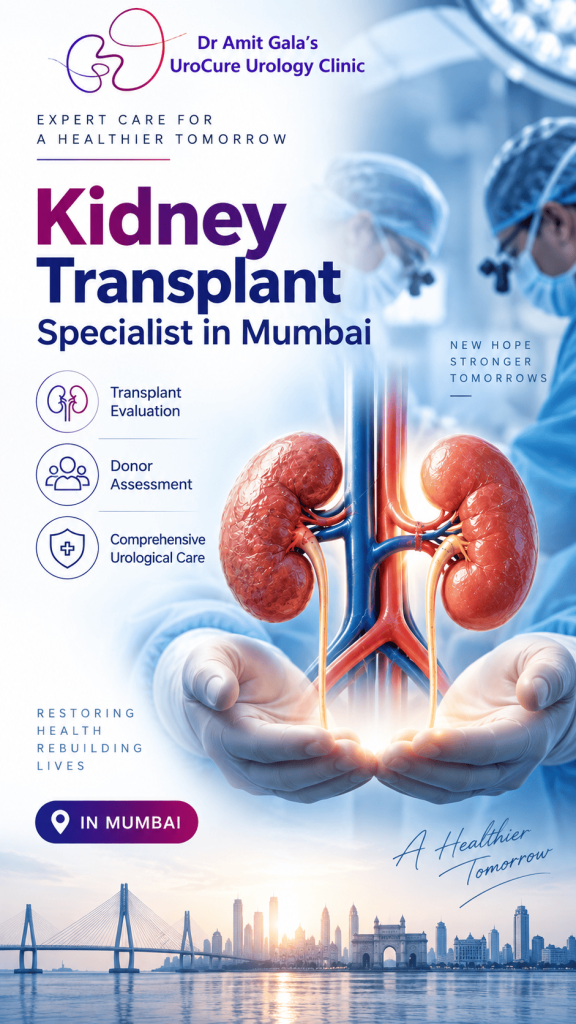
Kidney Transplant Specialist in Mumbai
Kidney Transplant in Mumbai Suburban: Complete Guide for Mumbai Western Suburban Residents
Kidney failure changes everyday life for patients and their families, and finding the right path toward treatment becomes the biggest priority. For residents across Mumbai's western suburbs, including Borivali, Dahisar, Kandivali, Malad, Goregaon, Andheri, and Bandra,Kidney transplant in Kandivali, Mumbai has become an accessible and effective solution for end-stage kidney disease. Dr. Amit Gala helps patients from these areas understand every step of their transplant journey, from early evaluation to long-term recovery.
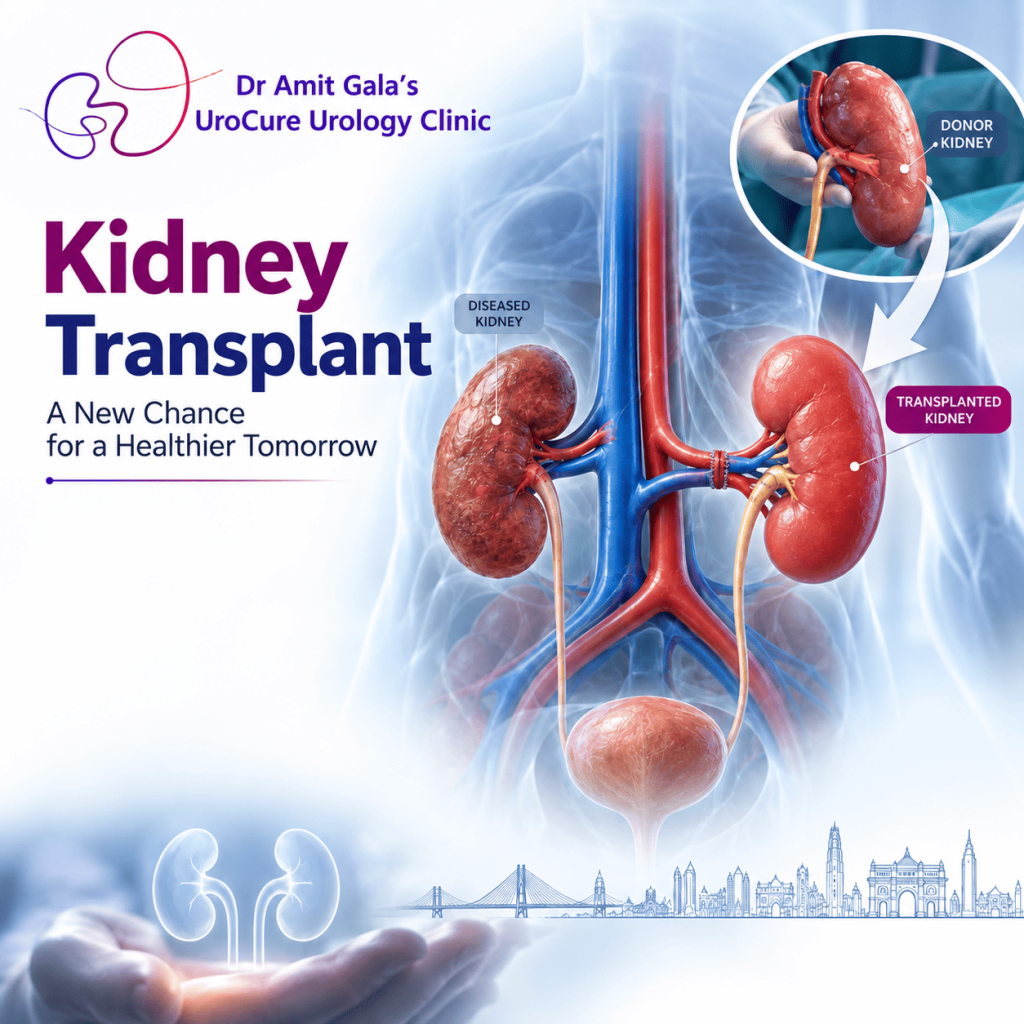
When You Have to Undergo Kidney Transplant
Stage 5 Chronic Kidney Disease & ESRD
Kidney transplant becomes necessary once kidney function drops below 15% of normal capacity, a stage doctors call end-stage renal disease. At this point, kidneys can no longer filter waste and excess fluid effectively, and the body starts showing signs of toxin buildup. Patients living in Kandivali, Malad, and Goregaon often reach this stage after years of managing chronic conditions like diabetes or hypertension.
Declining Quality of Life on Dialysis
Many patients start on dialysis first, but over time, the physical toll of repeated sessions becomes difficult to manage alongside work and family responsibilities. Frequent trips to dialysis centers, fatigue after each session, and dietary restrictions push many patients from Andheri and Bandra to consider transplant as a way to reclaim a more normal life.
Medical Conditions Leading to Failure
Diabetic nephropathy, chronic glomerulonephritis, polycystic kidney disease, and long-standing high blood pressure remain the most common reasons patients in Mumbai's suburbs eventually need transplant.
When Kidney Transplant Is Considered the Last Option
Conservative Failure
When medications, dietary changes, and blood pressure control no longer stabilize kidney function, transplant moves from a future consideration to an immediate necessity.
Dialysis Complications
Patients who develop repeated infections, difficult vascular access problems, or unstable blood pressure during dialysis sessions often benefit more from transplant than continued dialysis.
Progressive Deterioration
Some patients continue declining even with optimal dialysis care, developing complications like severe anemia, bone disease, or cardiovascular strain. In these situations, kidney transplant offers the best chance at halting further deterioration.
What Things Need to Be Checked Before Kidney Transplant
Recipient Health Evaluation
Before surgery, patients undergo extensive testing covering heart health, lung function, infection screening, and cancer screening.
Donor Compatibility and Health Screening
Compatibility testing checks blood type matching, HLA (human leukocyte antigen) tissue typing, and cross-matching to reduce rejection risk. Living donors from families in Borivali or Dahisar also undergo comprehensive health checks.
Psychological and Financial Readiness
Transplant success depends heavily on a patient's ability to commit to lifelong medication and follow-up visits.
Is Kidney Transplant the Last Recourse or Are Other Options Available?
Hemodialysis as an Alternative
Hemodialysis remains a viable long-term option for patients who cannot find a suitable donor or aren't surgical candidates.
Peritoneal Dialysis as an Alternative
Peritoneal dialysis offers a home-based alternative, using the lining of the abdomen to filter blood.
Why Transplant Often Offers Better Long-Term Outcomes
While dialysis keeps patients alive, transplant typically provides better energy levels, fewer dietary restrictions, and longer survival rates for eligible patients.
Technology Used in Kidney Transplant Surgery
Modern kidney transplant surgery relies on a combination of surgical technique, tissue matching science, and post-operative monitoring tools that have steadily improved outcomes over the past two decades.
Laparoscopic and Robotic Donor Nephrectomy
For living donors, removing the kidney through laparoscopic or robotic-assisted surgery has largely replaced older open surgical techniques. Small incisions, camera-guided instruments, and in robotic cases, a console-controlled surgical arm, allow surgeons to remove the donor kidney with less blood loss and a shorter hospital stay for the donor. This approach has made living donation less physically demanding, which has encouraged more family members to come forward as donors.
Tissue Typing and Cross-Matching Technology
Before any transplant, laboratories perform HLA typing to compare the genetic markers on donor and recipient tissue. Cross-matching tests then check whether the recipient's blood contains antibodies that would attack the donor kidney. Advances in this testing, including more sensitive laboratory techniques, help transplant teams identify compatible matches more accurately and reduce the risk of early organ rejection.
Desensitization Protocols for Incompatible Pairs
When a willing donor isn't a direct match, desensitization treatments can sometimes lower the recipient's antibody levels enough to allow transplant to proceed safely. This has opened transplant possibilities for patient-donor pairs who previously would have been turned away.
Machine Perfusion for Organ Preservation
For deceased donor kidneys, machine perfusion technology keeps the organ oxygenated and nourished with a preservation solution while it's transported and prepared for surgery, rather than simply storing it on ice. This technique has been associated with improved early kidney function after transplant in several studies, though practices vary by transplant center.
Immunosuppression Monitoring
After surgery, blood tests that measure drug levels of immunosuppressive medications help doctors fine-tune dosages for each patient. This individualized monitoring reduces the risk of both organ rejection and medication side effects, striking a careful balance that generic dosing cannot achieve.
Minimally Invasive Recipient Surgery
Some transplant centers now offer minimally invasive techniques for placing the donor kidney in the recipient as well, which can reduce surgical scarring and support faster recovery, though open surgery remains standard in many cases due to the need for precise vascular connections.
Which Surgeon to Choose for Kidney Transplant in Mumbai
Experience and Surgical Volume
Choosing a surgeon with extensive experience performing kidney transplants matters significantly for surgical outcomes. Dr. Amit Gala has guided numerous patients from Andheri, Bandra, and surrounding suburbs through successful transplant procedures.
Hospital Infrastructure and Transplant Team
A successful transplant depends on more than just the surgeon. Nephrologists, transplant coordinators, anesthesiologists, and critical care teams all play essential roles.
Accessibility for Suburban Patients
For patients living in Malad, Goregaon, Kandivali, or Borivali, choosing a surgeon and hospital with convenient access reduces travel stress during frequent follow-up visits.
What to Look for in a Kidney Transplant Surgeon
Qualifications and Track Record
Verify the surgeon's training, certifications, and specific experience with kidney transplant procedures.
Communication and Patient Comfort
A good transplant surgeon takes time to explain the procedure, risks, and expected recovery in simple language.
Post-Transplant Follow-Up Care
Long-term success depends on consistent monitoring after surgery, including regular kidney function tests and medication adjustments.
How to Prepare for Kidney Transplant
Pre-Surgery Medical Preparation
Patients complete final health assessments, adjust medications as directed, and receive any necessary vaccinations before surgery.
Lifestyle and Dietary Adjustments
Eating a balanced diet, staying physically active within safe limits, and avoiding smoking or alcohol strengthens the body ahead of surgery.
Arranging Support System and Logistics
Recovery requires help at home during the initial weeks, along with transportation for frequent follow-up visits.
Cost and Donor Considerations
Factors Affecting Kidney Transplant Cost in Mumbai
Costs vary based on hospital choice, donor type, length of hospital stay, and any complications requiring additional treatment.
Living Donor vs Deceased Donor Costs
Living donor transplants generally involve costs for both donor and recipient evaluation and surgery, while deceased donor transplants may include waiting list-related expenses.
Government Schemes and Financial Assistance
Several government health schemes and charitable programs help offset transplant costs for eligible patients in Maharashtra.
Insurance Coverage Terms and Conditions
What Most Policies Cover
Many health insurance policies cover kidney transplant surgery, hospital stay, and immediate post-operative care when the procedure is deemed medically necessary.
Common Exclusions to Check
Some policies exclude donor-related expenses, certain pre-existing condition waiting periods, or specific medication costs.
Documentation Required for Claims
Insurance claims typically require detailed medical reports, cost estimates, and pre-authorization approval before surgery.
Detailed Cost Factors to Consider for Kidney Transplant (With Approximate Ranges)
Pre-Transplant Evaluation and Testing
Combined testing for recipient and donor, including blood work, imaging, cardiac evaluation, infection screening, and tissue typing, typically ranges from ₹50,000 to ₹1,50,000, depending on how many tests are needed and whether repeat testing is required.
Donor-Related Expenses
Donor surgery, hospital stay, and recovery care in a living donor transplant usually adds ₹1,50,000 to ₹3,00,000 to the overall package, though many hospitals bundle this into a combined recipient-donor package rather than billing separately.
Hospital Type and Room Category
- Government or trust-run hospitals: Total transplant cost can range from approximately ₹3,00,000 to ₹6,00,000, sometimes lower for eligible patients under government schemes.
- Private hospitals (general/semi-private room): Approximately ₹7,00,000 to ₹10,00,000.
- Private hospitals (private room, premium facilities): Approximately ₹10,00,000 to ₹15,00,000 or higher.
Room category alone can shift the total bill by several lakhs, since room charges accumulate daily over a one to two week stay.
Surgical Approach
- Open donor nephrectomy tends to run lower on direct surgical cost.
- Laparoscopic or robotic-assisted donor surgery often adds ₹50,000 to ₹1,50,000 over open surgery, partly offset by a shorter donor hospital stay.
Length of Hospital Stay
Recipient hospital stay (typically 10–14 days without complications) forms a large part of the bill. Each additional day due to complications or delayed kidney function can add ₹15,000 to ₹40,000 per day, depending on the hospital and ICU requirements.
Immunosuppressive Medications
- First year after transplant: Approximately ₹15,000 to ₹30,000 per month, as doses are highest during this period.
- After the first year: Costs often reduce to approximately ₹8,000 to ₹15,000 per month, as dosages stabilize.
This is a lifelong recurring expense that families should budget for well beyond the surgery itself.
Post-Transplant Monitoring and Follow-Up
Routine blood tests and doctor visits in the first year can add approximately ₹50,000 to ₹1,00,000 annually, tapering down in subsequent years as visit frequency decreases.
Management of Complications
Rejection episodes, infections, or additional procedures are unpredictable but can add anywhere from ₹50,000 to several lakhs, depending on severity and hospital readmission needs.
Deceased Donor Transplant Considerations
Registration with the organ allocation authority typically involves a nominal fee, but ongoing dialysis costs during the waiting period, often ₹15,000 to ₹30,000 per month, should be factored in separately, since waiting times can extend for months or years.
Government Schemes and Charitable Support
Patients from economically weaker backgrounds may qualify for partial or full cost coverage through Maharashtra government health schemes or charitable trusts, which can significantly reduce the amounts listed above for eligible applicants.
Insurance Pre-Authorization
For insured patients, pre-authorization typically clarifies which of these cost components the policy covers, helping avoid unexpected out-of-pocket amounts once treatment begins.
Patient-Centric Approach
Cutting-Edge Technology
Taking the Next Step Toward Kidney Transplant in Mumbai
Facing kidney failure brings uncertainty, but expert guidance, modern surgical technology, and accessible care close to home make the transplant journey more manageable. Whether you’re in Borivali, Dahisar, Kandivali, Malad, Goregaon, Andheri, or Bandra, or Versova, Marol, Dr. Amit Gala provides comprehensive evaluation, transparent guidance, and dedicated support at every stage of kidney transplant care.
Schedule a consultation today to discuss your kidney health, understand your transplant options, and take the first confident step toward better health and improved quality of life.
Frequently Asked Questions
What is laparoscopic donor nephrectomy?
It is a minimally invasive surgical procedure to remove a kidney from a living donor for transplantation.
How long does the surgery take?
The procedure typically lasts about 2 to 3 hours.
What are the benefits of laparoscopic nephrectomy?
Benefits include less pain, shorter recovery times, and minimal scarring compared to traditional open surgery.
What is the recovery time after surgery?
Most donors can return to normal activities within 2 to 4 weeks.
Consult us for Uro-Cure Treatment
Consult Dr Amit Gala for Kidney Failure or related Concerns seek medical advice promptly from Dr Amit Gala’s – UROCURE, Urology Clinic Situated at Kandivali West, in Mumbai. Early diagnosis and treatment are crucial for effective management of these conditions.
Call to Book Appointment
Book Appointment
Next Read